Professor Kyle Meng will serve as a senior economist in Washington
Share this article



Environmental policies have economic impacts, and economic policies have environmental impacts. Fortunately, the Office of the President has someone on retainer to carefully consider these implications.
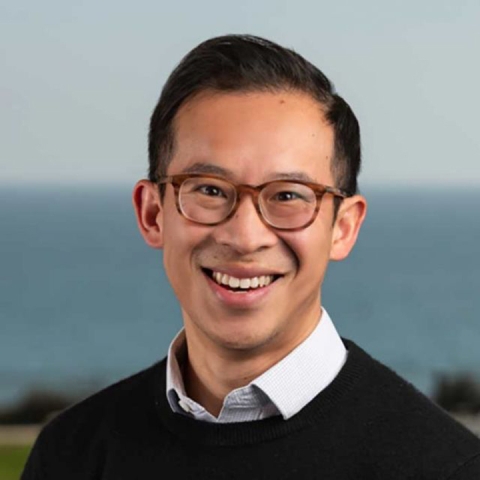
Associate Professor Kyle Meng will join the White House Council of Economic Advisers (CEA), a body charged with guiding the president on economic policy based on data, research and evidence. Meng will serve as the senior economist tasked with the council’s climate, energy and environment portfolio. Meng will be on government detail beginning in late August.
“It is an enormous honor to be asked to serve in the White House,” said Meng, an environmental economist at the Bren School of Environmental Science & Management and in the Department of Economics. “I hope my expertise will be useful in this pivotal moment for U.S. climate policy.”
“This appointment is a stellar recognition of Kyle’s incredible accomplishments as an economist,” said Steve Gaines, dean of the Bren School. “But even more importantly, the planet will benefit greatly from his ability to drive U.S.-led, innovative solutions to complex environmental challenges.”
Meng studies the consequences of environmental policies in terms of their efficacy, efficiency and equity impacts. He serves as the co-director of the Climate & Energy Program at UCSB’s Environmental Markets Lab (emLab). His research has explored the relationship between the global climate and civil wars, developed tools to forecast the cost of climate policy, and uncovered disparity in air pollution due to climate policies.
The Biden administration has ambitious targets for cutting greenhouse gas emissions, with legislation now in place to pursue this goal. The big challenge is how to decarbonize the economy in a way that benefits Americans across the board. “A key question for any major economic transition — and especially a green energy transition — is whether it also results in a more equitable society,” Meng said. For instance, an electric-vehicle subsidy might not benefit low-income communities if there is limited infrastructure for affordable charging.
“We have inherited a very unequal society,” he continued. “The multi-billion dollar question is whether addressing climate change can also provide opportunities to narrow this historic inequality. Finding those opportunities will be my central focus at the CEA.”
Harrison Tasoff
Science Writer
(805) 893-7220
harrisontasoff@ucsb.edu
Share this article
What's Current


